

Winterproofing Your Garden Furniture – Here's How
Reading time: 3–5 min
As soon as the nights turn cooler, the first frosts sweep across the country, and your garden furniture faces its first real test. Rattan, wood, metal and cushions all react differently to cold and damp. With a few simple steps this autumn, you can save yourself the cost of replacing furniture come spring. We'll show you what matters for each material, and where to store your furniture if your cellar is already full.
Why Winterproofing Is Worth It
The biggest enemy of your garden furniture is moisture, which seeps into cracks and pores and freezes when temperatures drop. It causes wood to crack, makes rattan weave brittle, and leads to rust on metal. On top of that, weeks of snow and heavy rain can soak cushions and covers right through. If you clean, dry and store your furniture properly now, it will get through winter practically unscathed and be ready to go again come spring.
Rattan and Poly-Rattan Furniture
Poly-rattan weave is weatherproof, but not winter-proof. Before storing it, clean it thoroughly with a soft brush and mild soapy water so dirt doesn't get a chance to set in. Then let it dry completely – any moisture trapped in the weave can burst the joints when it freezes. Loose or worn joints can easily be tightened again with the right clips before you put the furniture away.
- Cleaning:Clean with a soft brush and mild soapy water, then rinse thoroughly with clean water and let dry completely before storing.
- What to watch out for?Only put it into storage once the weave has dried out completely, as any trapped moisture can freeze in cold temperatures and damage the material.
- Need a quick fix?If individual sections of the weave have come loose, rubber connector clips are a simple and reliable way to hold them back in place, an inexpensive fix that costs just a few francs.
Cushions, Pads and Textiles
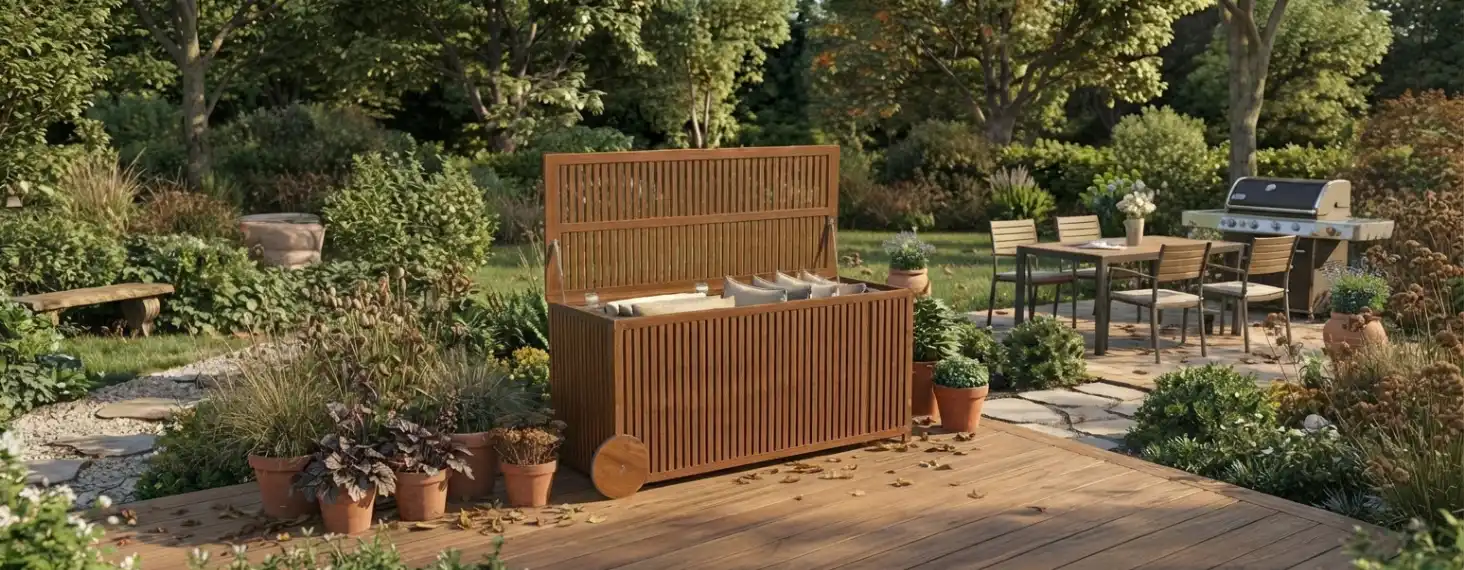
Seat cushions and pads are some of the most delicate parts of your garden furniture. Moisture quickly leads to mould here, and UV rays fade covers even in winter. Before storing them, wash the covers according to the care label, or at least brush them off, and let them dry thoroughly. A weatherproof cushion box with a lid then protects them reliably from damp without taking up extra space in the cellar – whether it's a simple plastic box or a rattan-look one that doubles as extra seating.
- Cleaning:Depending on the care label, either machine wash or simply brush off, then let dry completely before using or storing again.
- Where to store them?Ideally, store them in a weatherproof, lockable cushion box right on the patio or balcony, where they stay protected from moisture and dirt while remaining close at hand.
- What size?Cushion boxes come in a wide range of sizes, materials and designs, so there’s a suitable model for every patio and balcony. Prices range from around 60 to over 180 francs, depending on capacity and material.
Where to Put Your Furniture? Storing It Properly
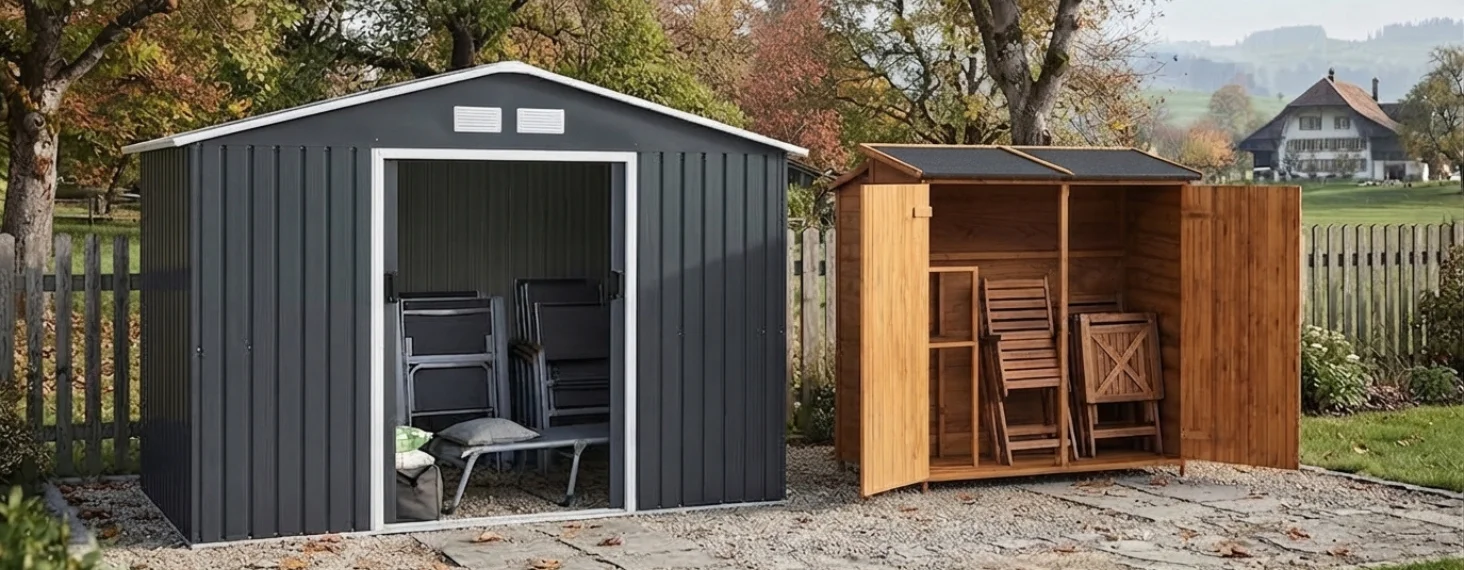
Not every balcony or garden has room in the cellar for a whole furniture set. For smaller items like cushions, decorations or tools, a compact garden box with a lid that can stay outside is often enough. For entire seating sets or several chairs, a garden shed is worth it. It also doubles as storage for garden tools in summer and comes in either wood or weather-resistant metal. If you don't want to carry heavy pieces like a beach chair on your own, transport wheels make moving them to winter storage much easier.
- Garden box:Practical for keeping cushions, seat pads and smaller garden items neatly stored and protected, available from around 40 to 80 francs depending on size.
- Garden shed:Offers plenty of space to store entire furniture sets, tools or garden equipment safely and dry. Available in wood or metal, from around 140 to 270 francs depending on size and design.
- Moving heavy furniture:Wheels with a brake make it easy to move heavy furniture such as beach chairs into winter storage, while the locking function ensures they stay securely in place.
In Brief: Wooden and Metal Furniture
Wood and metal furniture need winterproofing too, even though no special accessories are required: clean thoroughly and let dry completely before storing. For dull, weathered patches, wood benefits from a coat of oil or varnish beforehand. For metal, it's worth checking the coating, since small scratches give rust a way in. After that, both materials belong in a garden box or shed along with the rest of your furniture – if you want the lowest-maintenance option, store everything in a metal shed.
Overview at a Glance
| Material | Key measure | Where to store | Effort |
| Rattan / poly-rattan | Clean, dry, secure loose joints | Dry, frost-free | Low |
| Wood | Clean, re-oil if needed | Dry, frost-free | Medium |
| Metal / aluminium | Clean, touch up coating damage | Dry to lightly sheltered | Low |
| Cushions / textiles | Wash, dry completely | Cushion box | Low |
Pro Tips for Winterproofing
When should I start winterproofing my garden furniture?
As soon as regular night frosts are forecast, usually from late October or November. If you wait until the first snow falls, you already risk moisture damage.
Is it enough to just cover the furniture with a tarp?
For short, mild winters that can be enough, as long as the tarp is breathable and doesn't trap moisture. If you leave your furniture outside for months, you should still check regularly for pooled moisture under the cover.
Where should I put my seat cushions if I don't have cellar space?
A weatherproof cushion box with a lid can simply stay outside and reliably protects the cushions from moisture and UV rays, with no need for extra storage space indoors.
Do I need to re-oil wooden furniture every winter?
Not necessarily. As long as the surface is still evenly dark and smooth, a thorough cleaning is usually enough. It's only worth re-oiling before storage once the wood turns grey or rough.
Can aluminium furniture just stay outside?
Basically yes, as aluminium doesn’t rust and is highly weather-resistant. To keep the furniture looking good for longer and save yourself some cleaning in spring, dry storage or at least a suitable cover is still recommended.
Original publication date: 21.10.2026
About the Author
Nina D. is part of the content team and loves writing about topics related to leisure, furniture, and the outdoors. In her guides, she explains products in an easy-to-understand way and helps you make the right choice for you.